The purpose of this blog is to discuss the importance of information systems in sports. Our discussion will vary across a wide range of sports and from multiple points of view. There are five authors for this blog, Ronan McAlister, Ciaran Kelleher, Cathal Healy, Karen Morrissey and Taron Wright. We are all students in Trinity College Dublin and this blog has been set up as part of our Information Systems module. We are looking forward to getting started!
Injuries – In or Out?
Injury prevention and treatment is becoming more effective and refined due to the introduction of new technological advances, making sports safer in a number of ways. The best example being, the evolution of sports clothing and gear in American football. Where players from the early 1900’s would have been slamming into each other wearing leather pads leading to higher rates of concussion and injury, now concussion is a big focus in the modern NFL game and technological advances such as the VICIS ZERO1 football helmet are dropping the rates in concussion per year. Also other wearable technologies provide an opportunity to collect data about collisions for better monitoring of possible traumatic injuries, paving the way for more effective and immediate care.

Meanwhile, injury rehabilitation is also boosted from technological advances. For example, anti-gravity treadmills enable athletes to maintain at least some level of physical fitness while recovering from injuries that might be aggravated by weight-bearing activities. Many sports stars have made miraculous recoveries after suffering what seemed at the time to be season ending or even career ending injuries. For example, soccer superstar Zlatan Ibrahimovic tore his ACL at 35 years of age in April 2016 at the end of the season playing for Manchester United. ACL injuries generally have a lay off time of about 9 months, leading much speculation that 35 year old Zlatan’s playing career was over. However, seemingly after availing of a newly discovered surgical technique he recovered after just 7 months leaving many astounded and is still playing football today at the top level for AC Milan at 38 years of age.

Another remarkable rehabilitation currently underway is the case of Worcester rugby player Michael Fatialofa who suffered a serious spinal cord injury against Saracens in the Aviva Premiership on the 4th of January. This injury left the second row paralyzed from the neck down and he was rushed to hospital where he underwent surgery to relief the pressure on his spine. However, just 10 weeks after the incident Fatialofa’s wife posted an Instagram story of him walking during his rehabilitation unaided, incredibly defying professional opinions that he would never walk again. Due to Tech advancements in rehabilitation, his rehab may even see him on the rugby field again.

Due to Tech advancements, sporting franchises and clubs now have the capability to understand the impacts sports and exercise have on their player’s bodies, such as concussions and repetitive motion injuries, allows them to construct tailored treatment plans that suit each player’s specific needs. Making sport safer and allowing players to return to the sport they love once again far quicker than past eras would have allowed.
Motion Capture in Sport for Performance Analysis
The difference between winning and losing can be a matter of millimetres or milliseconds. Sport has become so precise that all those who wish to compete at the highest level are analyzing every movement trying to discover what can be improved and what can refined that will help shave priceless seconds off their times. The biggest competitors have dedicated teams of highly qualified personnel who record, watch and analyse the movements of their athletes to hone down on their technique. Performance analysis exists in almost every realm of the sporting world, from studying biomechanics to achieve greater joint extension and acceleration for a boost jump height in the high jump to finding a optimal bat weighting for athletes in baseball [1]. Coaches looking for optimal performance of their athletes use this information to develop a unique tailored training plan to focus on specific areas they seek to enhance.
A few years ago, performance analysis would have consisted of recording a training session or competitive event and then sitting down and watching the video, analyzing the mistakes that were made. This is a very basic and primitive version of performance analysis that has mostly been left in the past. Today, performance analysis uses the power of computer science to gather and analyse huge sets of intricate and complex data that could not be done by brain power alone. To understand and interpret this data specialist in performance analysis is required. These analysts are now an integral part of the backroom staff of any elite athlete as they provide stats and recordings to coaching staff about player movement and involvement, fatigue, work rate, heart beat and injury.

The main software that is used by performance analysts and bio-mechanical specialist alike to gather data on athletes movements is motion capture. Motion capture uses high speed cameras to record the three dimensional body movements of the athletes. There are two primary methods of motion capture: optical marker systems and markerless- systems. The optical marker method or inertial-sensor-based method consists of attaching small infrared balls to the anatomical joints of interest to capture their motion. The image above shows an elite cyclist using the optical marker method to gather data on his biomechanics and cycling technique. This data is used to check for range of motion, joint alignment, posture and symmetry in elation to the bike to ensure the bike and rider work together in a harmonious way. The bike is the single most important facet of a cyclist and a well tailored bike that is designed specifically to meet the physical needs of the athlete is paramount in their success.

The second method, markerless system uses solely image capturing to gather data. This method does not require the same amount of effort and time as the previous method be is often viewed as less informative and less effective. However, these differences are become more minute with the ever increasing technological capabilities of cameras and software. In one particular study by the International Military Sports Council markerless biomechanics analysis was implemented for optimization of soldier physical performance[3]. The study analysed the soliders using markerless systems biomechanics through an Obstacle Run course to understand their movements and kinematics. In another study marker-less motion capture system was piloted at the Winter Park Competition Centre using Captury Live, to observe asymmetry during shoulder movements, spite rotation, bilateral squats, single leg squats and a series of jumps and balancing movements in adult athletes. Full-body musculoskeletal images were produced to analyse strength, flexibility and dysfunction.
Modern sport at it’s most elite level is getting more precise and more accurate. Sport as we know it has never been so competitive with athletes pushing themselves to their physical and mental limits ever time they perform. Ever movement, ever step, ever technique is being analysed and studied. And this would not be possible without the aid of computer technology. We can thank technology this time for bringing in a new era of elite sport that has never so entertaining to watch.
Suits or Skins?
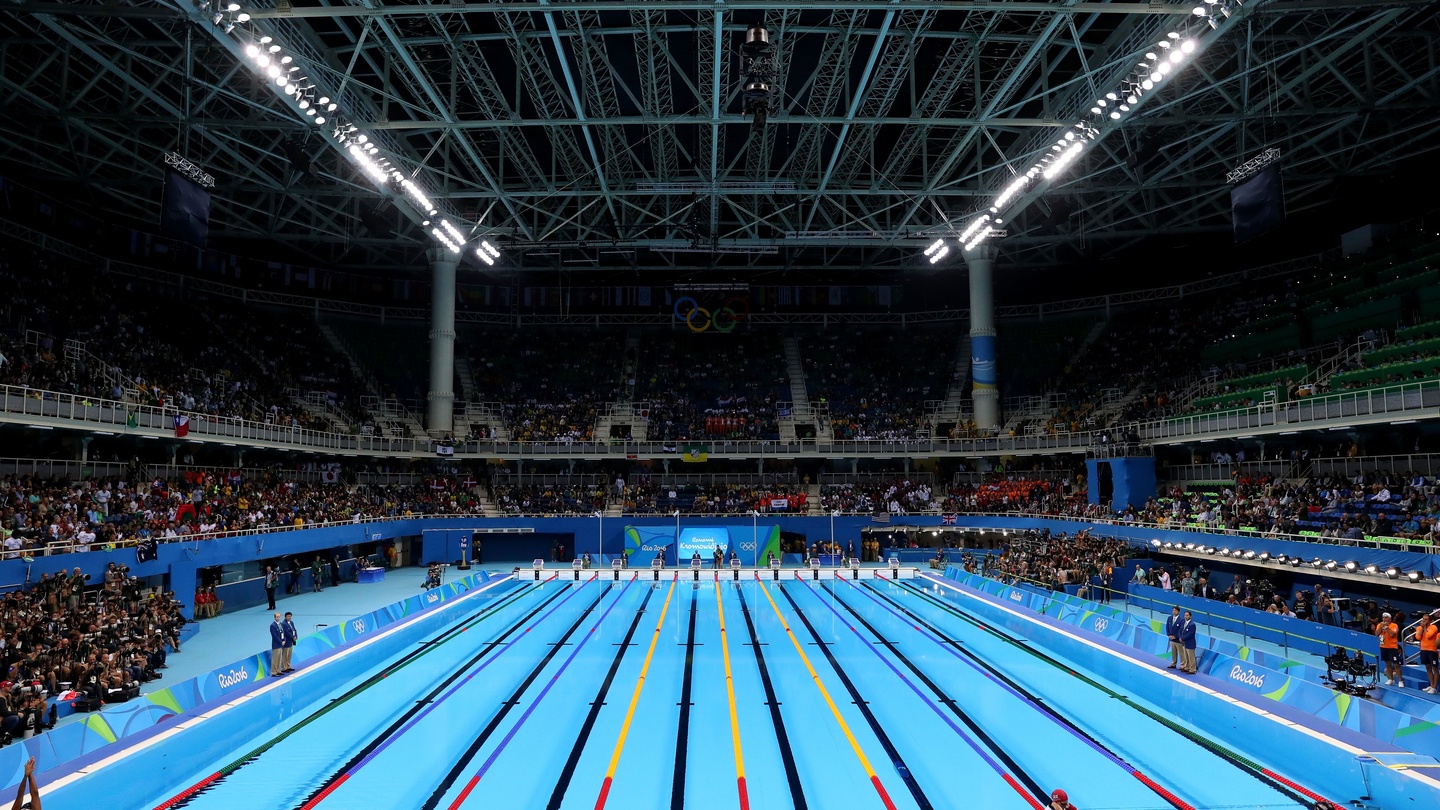
In competitive swimming, the biggest change since the beginning of competitions is the swimwear. Athlethes are always looking for the advantge over their rivals. But sometimes this can go too far and there is a need for regulations in the sport to stop these innovations from ruining the integrity of the sport. Innovation is not always good for sport and this is what happened to competitive swimming in the 2008 Olympics.
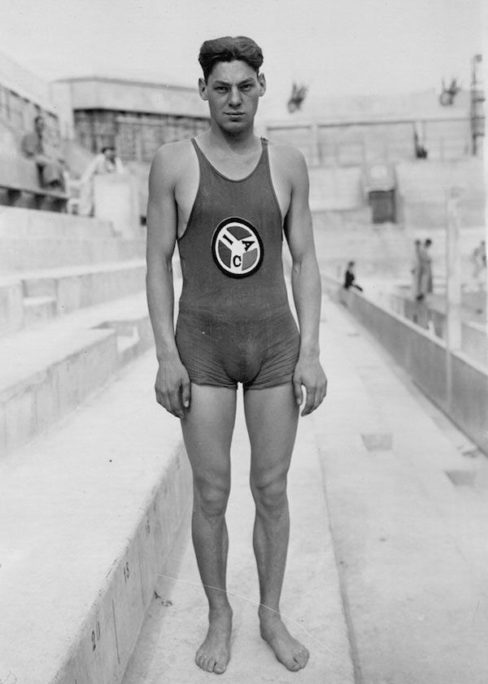
Originally men and women wore full swim suits made from cotten and wool. These suits were heavy and absorbed water making swimming difficult. Not much innovation happened until the 1930s, when Speedo introduced the swimwear ‘Fortitude’, which gave the swimmer better arm movement. When Speedo developed the ‘Racerback’ swimsuit in 1932 it caused controversy as it expoesed women’s shoulders. Clare Dennis swam a world record time 200m breaststroke wearing this swimsuit at only 16. This showed the type of swimsuit you wore had a major impact.
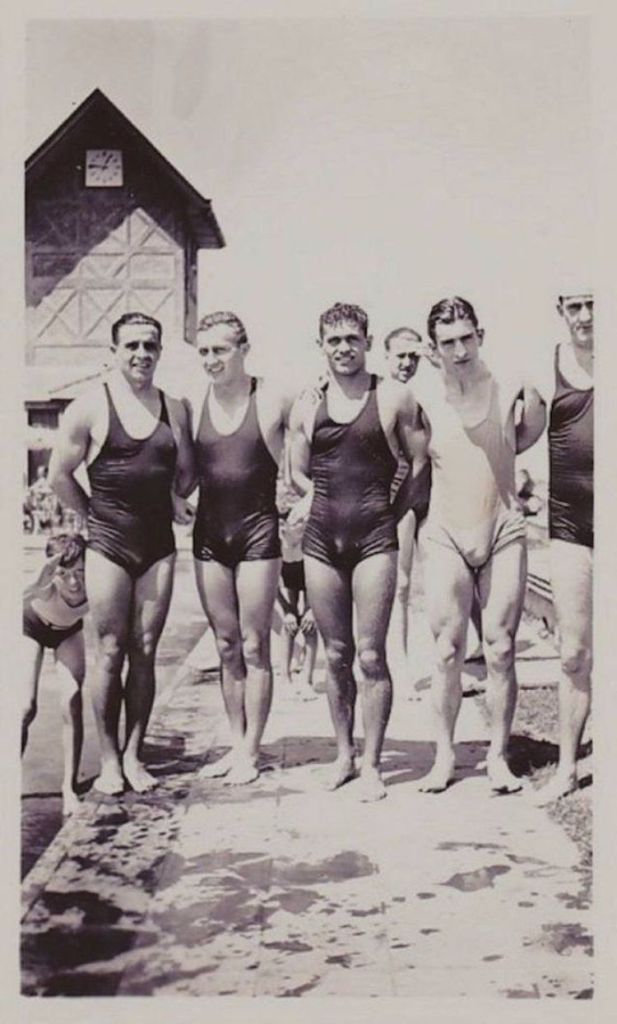
From the 1930s, men no longer wore the full suit swimwear but switched to trunks and wore as little material as possible as it was still made from material that dragged a lot. The first magor upgrade to material was the introduction of Nylon in the early 1950s. This materila was lighter, stronger and had less friction with the water. As this material improved it was found that it had less friction with the water than skin. So full body suits became the norm in the second half of the century only leaving the arms and shoulders exposed for freer movement.

In 2000 Speedo introduced ‘Fastskin’ suit. This was designed to be more streamlined and mimic shark skin. This was again to make the swimmer as slippy as possible making them faster. This swim suit also compressed your body to make the body aerodynamics of the body better and incereasing speed. The year this was introduced 14 out of 16 new records beaten that year were from the swimmers wearing the ‘Fastskin’ suit.
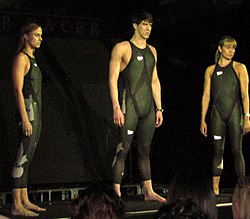
Controversy struck in 2008 when Speedo introduced its new ‘LZR’ suit, made from polyurethane this suit made the swimmer more bouyant and reduced the drag of the swimmer by up to 8%. Since the introduction over 200 world records were set in just over 2 years before this suit was banned by the governing body. These records still stand and will be very hard to beat without using the same suits that are now worn. After this happened new regulations in swimming were introduced banning non-textile materials and having restrictions on the buoyancy, thickness and design of the suit.
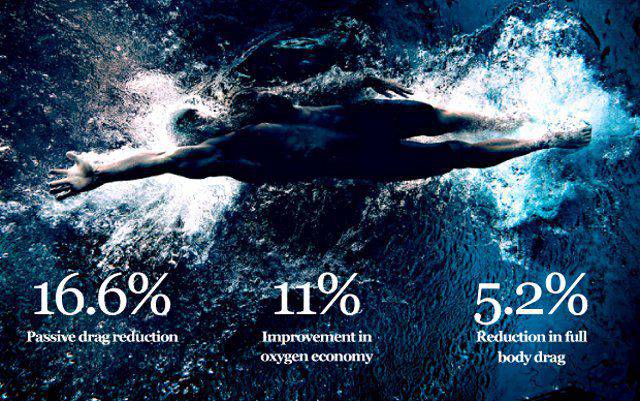
Speedo again are trying to push the boundaries for the upcoming Olympics this year, with their new ‘LZR Pure Intent’. This new suit again will aim to make the swimmer more streamline and reduce drag. Can new swimsuits really improve much with the new regulations or will swimmers have to rely on their ability over better swimwear.
Couch Potato

As we enter the roaring 20’s it has become clear that numbers matter. In the past number of years there has been an ever increasing interest in personal fitness devices [1]. From free-to-download apps to high-end smart watches, the common theme is numbers. These systems absorb the readings from every last category of your health and digest it into a user-friendly and intuitive interface. There isn’t anything these systems love more than a beautiful graphic to display all their hard-earned information. Graphics provide a very simple way for a user to track their progress or regress as they carry out their routine.
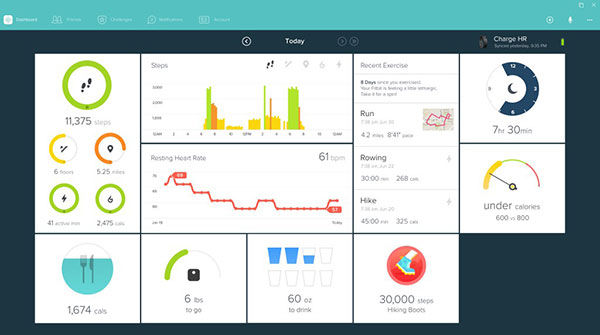
To celebrate the ease of access for anyone looking to delve deeper into their fitness /health potential, I would like to give an honorable mention to some of the systems that have taken us by storm already:
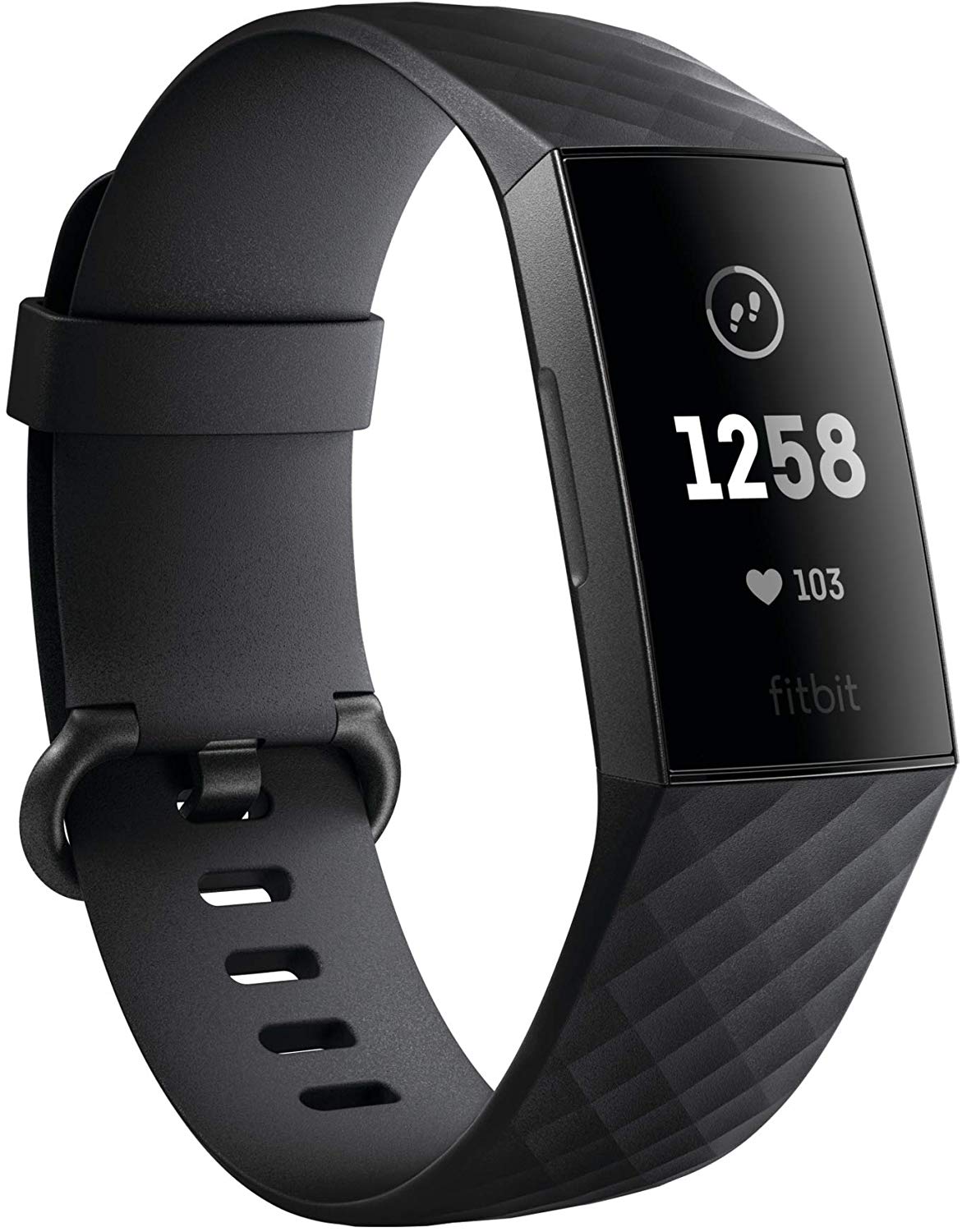
- Fitbit (I know it’s a company and not a device): Fitbit has been a major player in the market of fitness trackers. The wearable smart devices can record heart rate, steps taken, steps climbed, quality of sleep and more. All of this providing the user with an in depth look at their daily routine and offering simple ways to improve quality of life through exercise and good sleeping patterns. With the company’s annual revenue hovering around the $1.5bn mark [2], it looks like they will continue to play a major role in the fitness of people for years to come.
- Fitness Bikes: Fitness bikes have been around for a very long time, as early as the 18th century with the so-called, “Gymnasticon“. The idea of stationary exercise is appealing for many reasons. It is possible to exercise in the comfort of your own home no matter the weather, travel to gyms is not necessary and social anxiety can be avoided. With the developments of social media today and the ever increasing pressure on people to be ‘perfect’, social anxiety is a major problem. The exercise bike at home provides the opportunity to stay healthy or to gain weight without the glaring eyes of the Instagram models at the gym. And companies like Peloton, provide the same experience of a gym but at home with interactive live sessions or workouts on demand. And as the social issues develop more over the next decade, I believe that home fitness will be a key player in people’s health.
- HomeCourt: A personal favourite of mine is the HomeCourt app. Free to download, the app gives any person with an interest in basketball and improving their shooting technique, the opportunity for real-time, accurate and helpful feedback. The app uses your smartphone’s camera (no need for any extra equipment – except a basketball hoop and ball of course) to track the flight of the ball, your body’s movement and your positioning. The app knows when you make a shot or miss and will track continuously as you practice. The app also offers ready-made drills and workouts for the user to engage with to improve their skills. The key advantage of this app is that it provides all the necessary feedback a user needs without any complicated equipment. And a recent update, gives users the opportunity to be notice by representatives from the NBA if their scores are consistently exceptional. So get shooting!
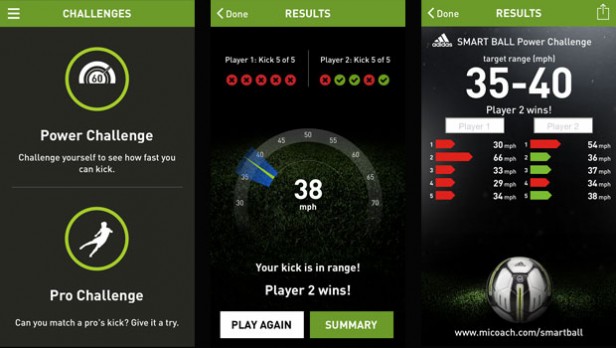
- Adidas miCoach Smart Ball: This device is very similar to the HomeCourt app except instead of using cameras to track the ball, the ball itself is the tracker (and it’s only used for soccer). The ball is capable of recording the impact forces, speed, spin and curve of the ball when it is kicked. And with the help of cameras it knows its position relative to the goal. Similar to the HomeCourt app, it gives the feeling that expensive, sophisticated equipment is being used, and this adds to its value hugely.
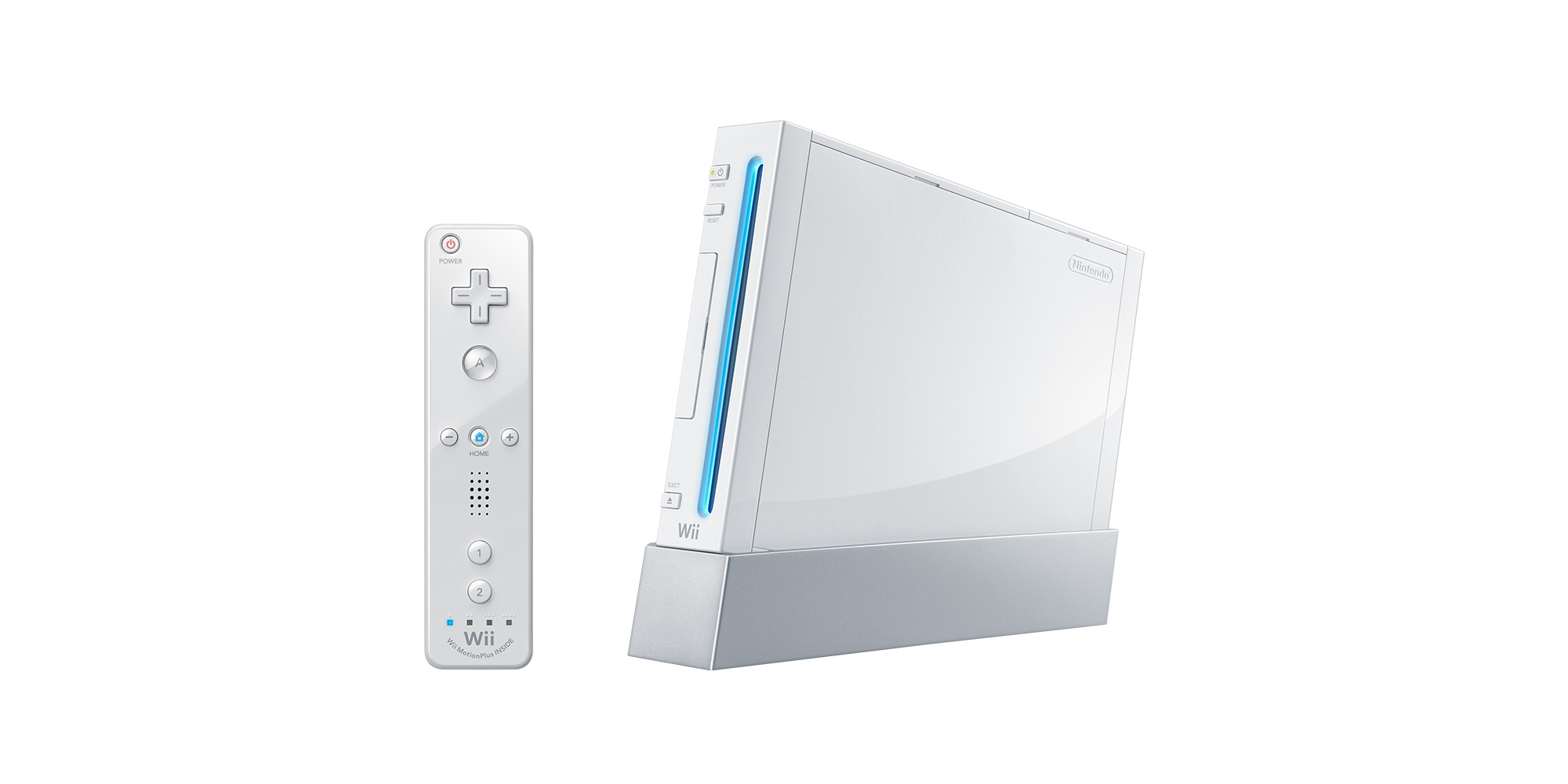
- Nintendo Wii: The Nintendo Wii took the world by storm after its release in 2006. The idea of using physical movements to control characters in the game made people feel immersed in the experience. It could be perceived as the first version of Virtual Reality. The game was a great way to have fun with friends and family while engaging in physical activity. The Wii Fit addition, provide further opportunity to get fit in your own home in a more direct way than the standard Wii games. Overall the Wii had no weaknesses during its reign as the top gaming console, until Sony and Microsoft released their next generation consoles, the PlayStation 3 and the Xbox 360.
- Apps: There are countless fitness and health apps around nowadays to help users track progress and set goals. Different apps are tailored to different people. The Health app on iPhones provides help by tracking the user’s weight and calorie intake, as well as recording any other health issues, and it can also provide essential information in an emergency. For example, a user with nut allergy enters this information into the app and if an allergic reaction happens, an emergency response member can get this information from the phone’s emergency display. Other apps, like MyFitnessPal, by Under Amour, has a feature which allows users to take photos of the food they are buying in the supermarket and display how many calories are in the product, a very useful tool to anyone that needs to keep track of what they are eating. Strava is an app that tries to create a community of people with the same goal of getting fit. The user can upload their run, walk and cycle routes to the timeline and other users can see what the route is and perhaps use the route themselves. Overall there isn’t a lack of accessibility to fitness programs and helpful feedback, it is up to users to gather the motivation to keep themselves healthy.

F1 2021

F1 has started becoming too difficult for the smaller teams to compete with the big spenders of the sport. This has led to the top 3 or 4 teams dominating all the races and in turn has led to less exciting racing. The mid pack teams are now nearly the most exciting part as it’s more competitive and less predictable. For this reason, the F1 has decided to completely change the rules to make it more competitive and giving the smaller teams a more level playing field and making the sport more about the drivers than the cars and in turn making it a lot more exciting for the spectators.
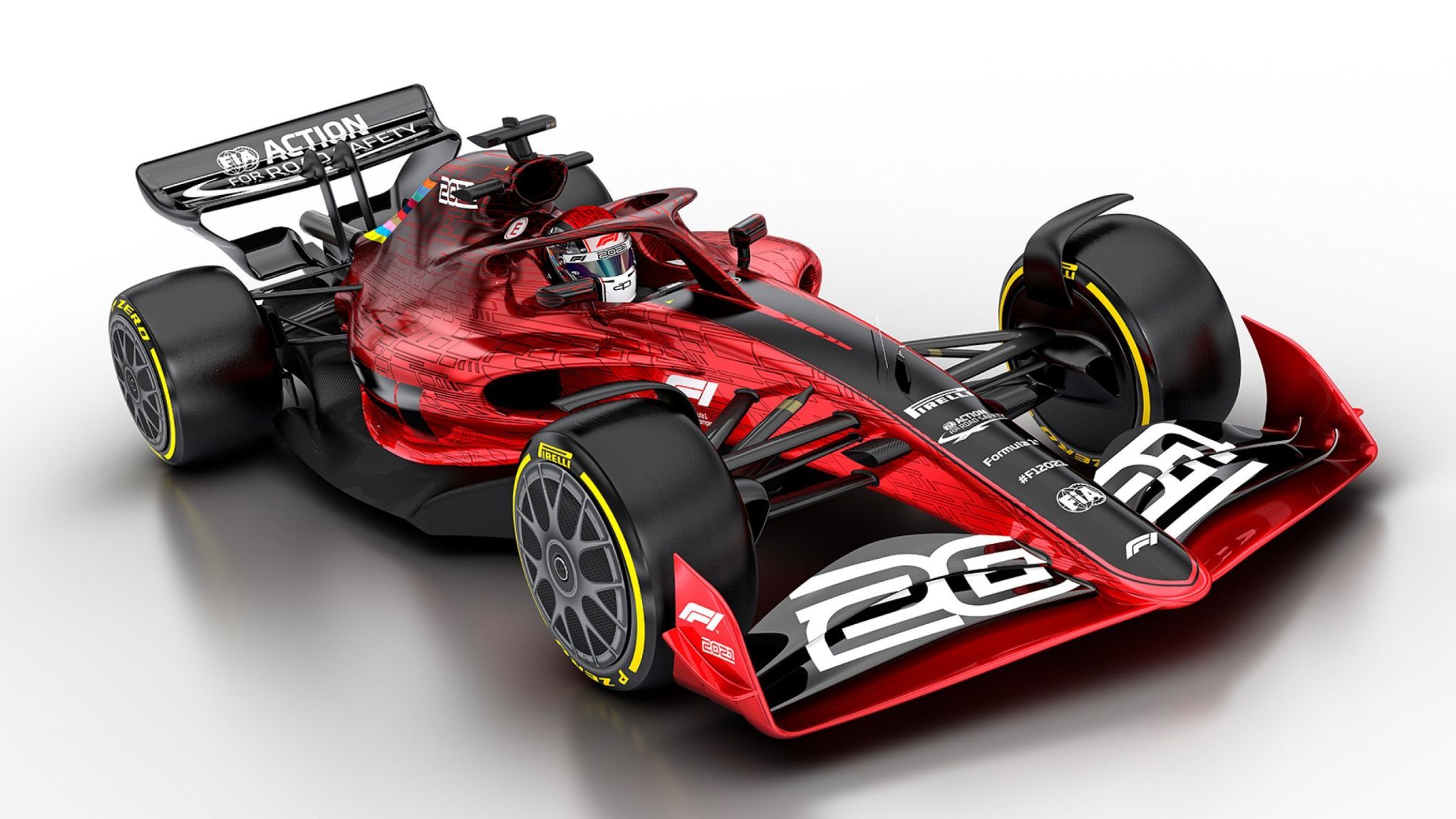
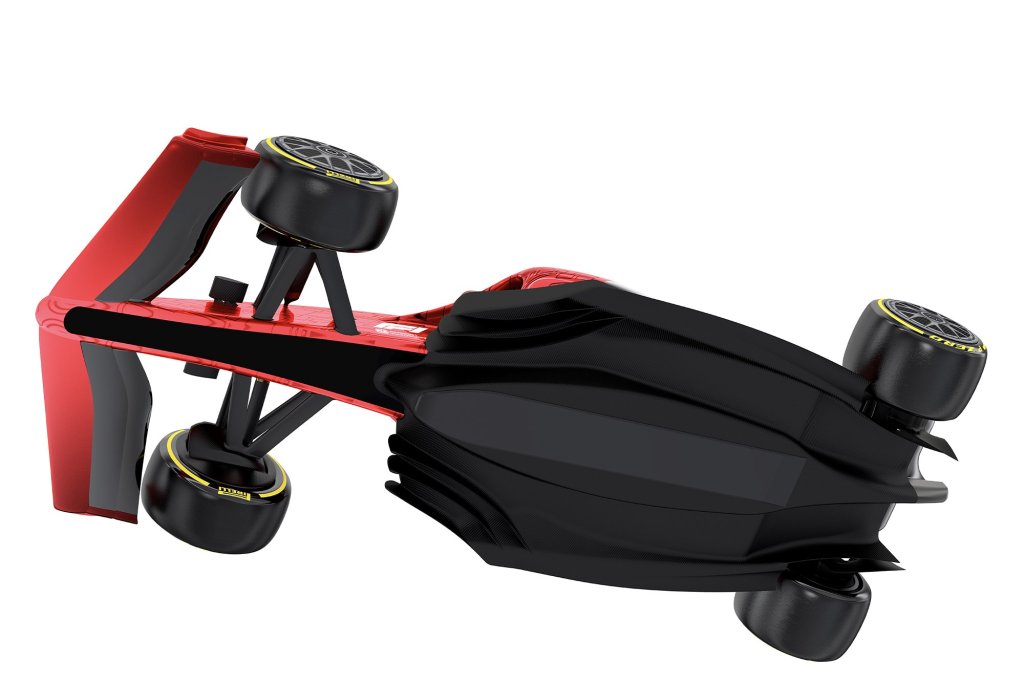
One of the biggest changes in rules is the actual car, it will be completly redesigned. One of the most significant changes is the reintroduction of ground effect cars, which has been banned in the sport since 1982. This and a few other new designs like new wheel wake control devices are being implemented to reduce the amount of “dirty air” being given off by the cars in front. This means the car behind is losing downforce and therefore speed, which makes it very difficult to actually overtake the car in front. In 2019 the car would lose 40% of its downforce from trying to overtake the car in front. From 2021 with the new design, this should drop to around 5-10%. This will lead to closer racing. The aesthetics of the car have changed also, with a striking new look and new bigger tyres and rims, as can be seen above compared to the current look of the car.
Another change to the rules is the restrictions of fewer upgrades and part changes allowed during a racing weekend. This will make teams have to use different strategies to conserve their parts better to last the whole weekend. There will also be an introduction of more standarised parts, to level the field a bit more. All these changes won’t add to the speed of the cars, but will stop the bigger teams having more technical advantage over the smaller, while also limiting them the amount of parts they can replace. This is again for the benefit of the smaller teams.
The structure for the racing weekend has also changed. With the season expanded to 25 races, the weekend has been condensed to make it easier for the race teams, while also making it a better viewing experience for the viewers. Teams must also race drivers with two Grand Prix or less in at least two practice sessions during the season. This will pave the way for future drivers in the sport.

For the first time ever, F1 is going to introduce spending caps. This will be for development of the car and on track performance only and excludes salaries for drivers and marketing. The spending cap will be set at $175 million. This will stop the big teams completly outspending the smaller teams and end the huge spending gap. Smaller teams now have the capabilities to finally compete in the championship. An independent regulator will over see and enforce this new rule change.
Innovation in F1
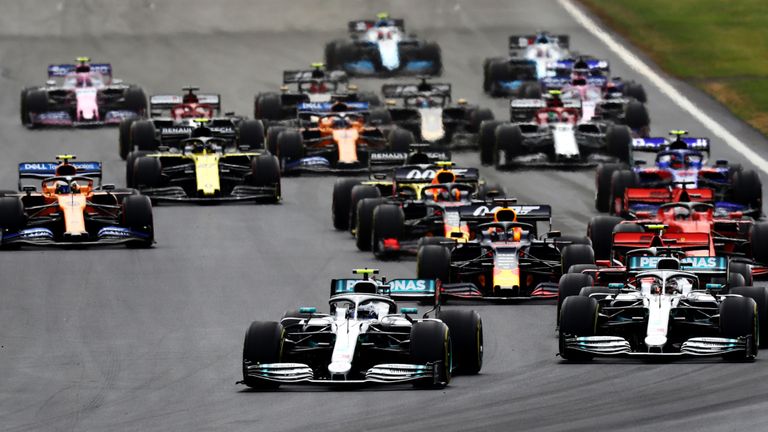
Formula 1 racing has been at the forefront of innovation since its beginnings in 1950. Over the past 70 years the sport has contributed to society with constructors making leaps and bounds in the safety and efficiency of cars. Formula 1 has provided a platform for highly competitive innovation in technology. The desire to win drives teams to research and develop the finest details on their cars to gain any slight advantage over their competitors.

F1 began in a society where fast cars were new to the world. The technology they used in the cars were mainly for power and straight line speed. The sport was a spectacle and quickly attracted a lot of attention from media and then grew in popularity. This lead to major sponsorship deals, this meant teams had more money to spend on the cars. The cars grew more powerful and in turn more difficult to control. The sport became notorious for driver deaths and almost became part of the culture with media portraying the drivers as brave warriors taking on a highly dangerous mission.
With many driver deaths, concerns grew over the safety of the cars. Through the 1960s, car designers realized that putting the engine behind the driver would help put the power down to the ground and this innovation further increased speed but more importantly it provided the car with more grip around corners, reducing the chances of a car sliding out into a wall. The 1960s also provided the first use of a V6 engine in an F1 car. The innovation came with a huge disadvantage where the fuel was stored all around the driver, creating a high fire risk. And with straw bales being used as safety barriers (highly flammable), many driver suffered horrible injuries and worse.

The aerodynamics era began in the 1970s, as manufacturers added “upside-down aeroplane wings” to their cars. This created downforce and allowed cars to take corners much more quickly and it also helped reduce the risk of cars flying into the air on high speed straights. The 1970s gave us the infamous “fan-car”, which used a huge fan to suck air from under the car through the engine (it was quickly banned). We also got the obscure six-wheeled cars, which also didn’t last very long. Through the 80s and 90s the cars developed more sophisticated wings and aerodynamic details. The age-old debate between the safety and the speed of cars was ongoing and brought around a major increase in the details of safety standards with Professor Sid Watkins and many drivers campaigning for it.

In 1994, the death of the beloved Ayrton Senna caused car designers to rethink the safety of the driver and the driver cockpit was born. As well as the reinforced cockpit, the front nose height came up to provide a better impact resistance. In 2003 an innovation called Head and Neck Support (HANS) further increased the safety of the drivers head. 2009 brought us Kinetic Energy Recovery (KERS), allowing the car to recover lost energy from braking and deploy it out of a corner to increase acceleration. Aerodynamics continued to dominate the appearance of the cars and in 2011 the Drag Reduction Sytem (DRS) was introduced to the world. This was a system allowing the driver to open the downforce wing on the back of the car when on straights to increase the maximum speed. And finally in 2018 the halo became mandatory for all F1 cars for the protection of drivers in the case of the car flipping over.

F1 continues to improve cars year on year, with major manufacturers such as Mercedes, Ferrari and Red Bull pushing the boundaries of the rules set out by the Federation Internationale de L’Automobile (FIA). Mercedes have introduced an experimental technology changing their steering system for the 2020/2021 season. The FIA are currently reviewing the technology to determine if it is within the rules and if it is withing the rules and the testing of the car proves that it is beneficial to Mercedes, there will be a scramble from the other teams to try copy the tech for their own car. The rules are being overhauled in a major way for the 2021/2022 season which will require car manufacturers to get their thinking minds active once again.
VAR VERDICT
Section of match point giving updates on the VAR decisions carried out on a weekly basis in the premier league, whereby a final VAR verdict will be reached at the end of the season whether VAR was a success or a failure during its debut season in the premier league.
MATCH-DAY 26
Sat 8th Feb
Everton vs Crystal Palace (3 – 1)
- 43′ Penalty appeal for a challenge on Zaha by Seamus Coleman, VAR check complete and no penalty awarded.
Brighton vs Watford (1 -1)
- 42′ Big penalty appeal for Brighton as a coming together between Schelotto and Deulofeu results in the Brighton player going to ground in the box. The referee waved play on and VAR awarded no penalty.

Sun 9th Feb
Sheffield United vs Bournemouth (2 – 1)
- No VAR checks were conducted during the 90 minutes.

Fri 14th Feb
Wolves vs Leicester (0 – 0)
- 45’ – Wily Boly’s headed goal from a short corner routine was ruled out for offside in the build-up.

Sat 15th Feb
Southampton vs Burnley (1 – 2)
- 82’ The ball strikes Ben Mee on the arm leading to penalty appeals from the saints but VAR rules his hand was in a natural position and no penalty was awarded.
Norwich vs Liverpool (0 – 1)
- 78’ Mane’s goal is checked for a possible foul in the lead up to the goal, as it appears that he may have pushed the center half in the back to get the ball. After a lengthy VAR check the referees on field decision is upheld so the goal stands.

Sun 16th Feb
Aston Villa vs Tottenham (2 – 3)
- 45’ Spurs penalty awarded against Engels for the challenge on Bergwijn.
Arsenal vs Newcastle (4 – 0)
- No VAR checks were conducted throughout the duration of the game.
Mon 17th Feb
Chelsea vs Manchester United (0 – 2)
- 21’ VAR check for dangerous play against Maguire as he appears to lash out at the Chelsea forward as he goes to ground. No foul play found.
- 55’ Kurt Zouma’s goal from a Chelsea corner is disallowed for a foul in the box by Azpilicueta
- 77’ Giroud’s headed Goal is disallowed for a narrow offside.

Wed 19th Feb
Manchester City vs West Ham (2 – 0)
- No VAR checks carried out during the game
Summing up the action from Match-day (26):
VAR played a major role in 3 of the fixtures scheduled, deciding how the points were split between the teams in each case. The first game being a top half of the table clash between Wolves and Leicester in Molineux, where a controversial VAR call was the main talking point in an otherwise damp squib nil all. The decision was another narrow offside, which premier league fans are becoming all too familiar with and left many in the stadium, at home and on the pitch wondering where and why the goal was disallowed. The confusion was further not helped when the ref could not explain to the Wolverhampton captain, Conor Coady, where and why the goal had been flagged for offside, leaving the wolves captain a frustrated figure walking down the tunnel for half time. This poor communication is one of the main issues many fans have with VAR and has many pundits and former players such as Gary Neville asking for the officials to be ‘mic’d up’ in a similar fashion to rugby where technology is so successful in the sport. This was a bad game for VAR and highlights the changes the FA need to consider for next season.
The second game where VAR played a defining role was Aston Villa vs Tottenham in Villa Park, as right on the cusp of half time a penalty was awarded in favour of spurs. Initially, it looked a fine challenge in real time with the referee pointing for a goal kick. However, this was overturned after a 2-minute VAR check which eventually lead to Heung Min-Son converting from the penalty spot and ultimately awarded all three points to spurs. A positive use of VAR which eventually arrived at the correct decision, which is why it was brought in.
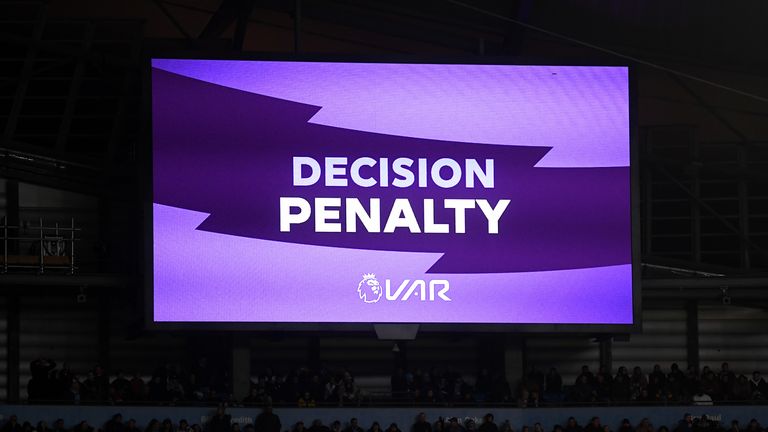
The last game impacted by VAR was the Monday night football game between Chelsea and Manchester United in Stamford Bridge, where United had the rub of the green with the three major incidents in the game. Chelsea found the back of the net twice to seemingly get them back in the game, but on both occasions the goals were rightly ruled out by VAR for an offside and a foul in the build-up. However, during the 21st minute of the game Harry Maguire escaped a red card for dangerous play, for a similar incident that saw Heung Min-Son sent off against Chelsea only a few weeks prior. Both Roy Keane and Jamie Carragher agreed after the game that Maguire was very lucky to escape a red card which would have completely changed the shape of the game and inevitably the result. This lack of consistency with VAR calls is also one of the main issues being raised by fans and players alike and is something the FA and officials must strive for in the future.
All other premier league games for this match day had minimum if not any VAR checks carried out during the 90 minutes. All checks such as the handball check in the Southampton vs Burnley game were in accordance with the on-field decision of the referee, so the technology was not a major talking point during the game.
Technology in Hurling

In Hurling the design of the sliotar has changed over the years. At first it was made of wood, leather and even animal hair. There was no regulations on the size, weight or even material of the sliotar. This led to teams playing each other often debating about what size sliotar to use for the match. Due to the balls inconsistencies and poor manufacturing it often led to the ball losing shape and becoming soggy bacause of the material it was made from.
Johnny McAuliffe came up with the first modern design of the sliotar. The ball was made from cork and covered with two pieces of leather, making the ball more consistant, hard wearing and water resistant. The GAA also trialed a rubber ball in the early 2000 but this ball had a lot more bounce and also moved faster than the cork-cored ball.
As seen in recent years, players are now able to hit the ball much faster and further. This has cut out a lot of the play of possession and tackling. We’re now seeing the ball regularly being struck from the backline and going over the bar. This used to be a rare sight only the best players could do, but now your average player in a club match can do this.

This is down to manufacturers designing the ball to be hit as far as possible. They do this to sell more balls to players, as everyone wants to look good and be able to hit the ball as far as possible. Manufacturers for years have been incorrectly using the official GAA mark. This has led to the huge distances the players are striking the ball in matches in recent years.
Another problem with all the matches being played on television is the white coloured ball is very hard to see when its hit in the air and is against the clouds. As a viewer you just have to guess where the ball actually is.
To combat these problems the GAA has partnered with DMF system to better control the quality and performance of the sliotars by placing a Near Field Communications tag in each sliotar. This NFC tag can be linked to an app on your phone to see if the sliotar is up to standard and is official. This will allow the GAA to have tighter control over its balls and hopefully bring the striking distance of the ball in the game down.

Valerie Kennely, an optometrist, also advised on a colour change from the traditional white it has become over the years. Yellow has been chosen as the new colour to use. This has followed tennis, which changed the colour of there ball to yellow to make it easier to view on television. Although there’s some opposition to this colour change, it will benefit players and and spectators alike.
Fantasy Sports
Fantasy sports gives sports fans a unique opportunity to interact with real-world sports. Fans score points based on how well their chosen players do in real games. This gives fans deep insight into statistics of games and helps them see a different perspective on games. For an example let’s take basketball….players can score points based on several different categories, points, rebounds, assists, steals and blocks. Taking these factors into account fans have to delve deeper into players abilities rather than who they might see as a good player. Giannis Antetokounmpo (a mouthful) won the NBA’s Most Valuable Player award for the 2018-2019 season, an award which is given to the player that is regarded as the best in the league, as voted by players, fans and members of the media. Although he is the current MVP, he is ranked as the 6th best fantasy player.

Fantasy sports only happens because of the development of information systems. Live statistics are used to count scores and allow fans to analyze games as they are happening on a deeper level. This makes fans feel even more connected to the players and their teams and makes them feel like they are part of the game itself. Fans can also get sucked in and be addicted as many people gamble money on their teams. There are even people who play fantasy sports for a living and that brings up the age old debate about the ethics of gambling…..

Athle-tech
The presence of technology in Athletics has become the new age version of doping. With the 2020 Olympics just around the corner, the World Athletics Commission are scrambling to set standards on what type of running shoes are accepted with newly implemented rules and regulations. The question being posed now is, are these advancements in technology actually taking away from the sport more than they are contributing.
Technology has undoubtedly impacted the way we now participate in athletics, both on an amateur and a competitive level. The average runner is now kitted out head to toe in the newest running gear specialized to their own personal goals. Clothing items have become sleeker, more streamlined and less cumbersome. Fitbits have allowed us to monitor our fitness levels, enabling people to hone their routines and maximize their performance. But the soul of every runner, the item that is intrinsic in their attire, that becomes apart of them with each step, is their shoe. And it is the modern running shoe that is under intense scrutiny in the news.
A story has emerged this week, whereby Irish Athlete Fionnuala McCormack, known for her representation of Ireland in the 2008 and 2012 Olympics in the steeplchase, critized the decision of World Athletics to permit the use of the controversial Nike Vaporfly running shoes for the 2020 Olympics. Fionnula was disappointed by the ‘weak’ regulations put in place by the sport’s governing body that state, road shoes must have soles no thicker than 40mm and not contain more than one rigid, embedded plate. The new regulations enforce that any shoe must have been available to purchase on open retail four months before its usage in competition.
However the Nike Vapour have already made their impact. The infamous shoes are renowned in the athletic community for the part they played in two marathon world records being broken within 24 hours. Firstly Eliud Kipchoge’s record smashing 26.2 mile run in under 2 hours, then Brigid Kosgei slashed over a minute off of the previous women’s marathon record. However, Fionnula does not agree with the grounds on which these records were achieved. She raises a very interesting debate with her comment ‘You’re not competing on a level playing field if you don’t have the same shoes.’
And this is where the real issue among all this controversy lies. Running used to be about ability, endurance, perseverance, hard-work, dedication and sacrifice. When the only difference between competitors was who trained harder. Now things have changed. Runners aren’t on a level playing field with their competitors if they don’t possess the latest technology. As Fionnula McCormack said, and many others agree with, “I’m not a fan of technology in running because I like it as it is. I suppose it’s more pure.’ So the question that should be asked now is, has the purity of running been tainted by technology or are we just being too conservative in an ever progressive world?
 Match Point